

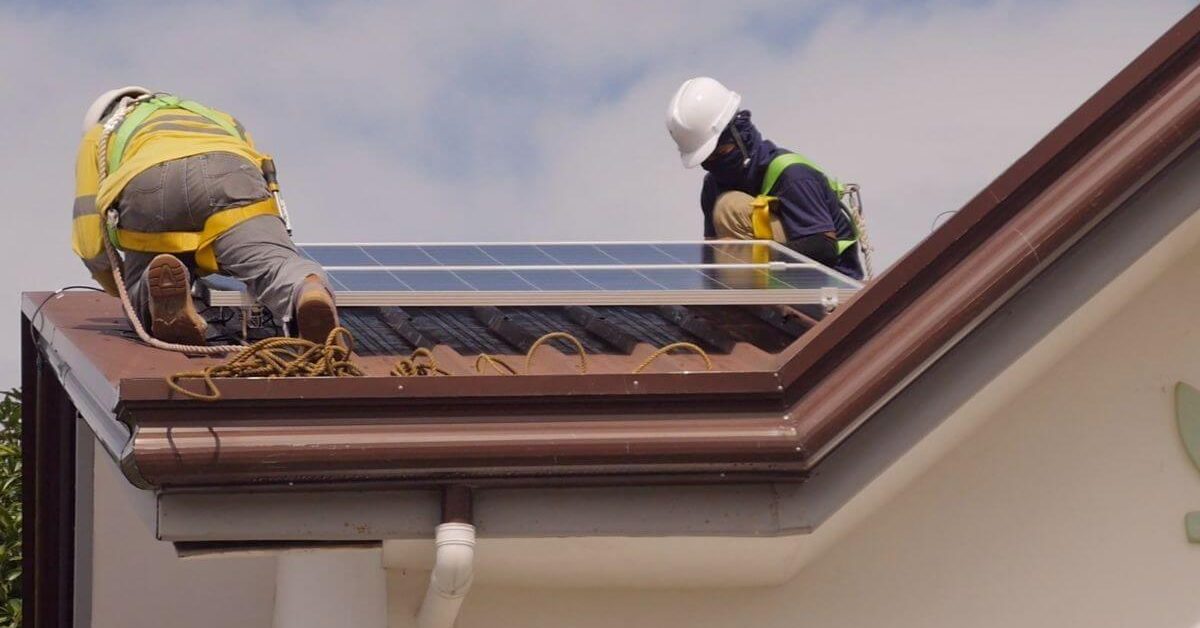

overview
- Matching the module types to the roof design ensures that solar systems function safely and efficiently.
- By evaluating roofing material, structure and climate conditions, homeowners and builders can select compatible panels that maximize energy production, durability and long-term performance on residential, commercial and industrial roofs.
Instead of asking, “What is the best solar panel in the Philippines?” A better question would be, “What is best for my roof?” Matching panel types to roof design begins with evaluating four key factors: roof material, available surface area, structural resilience, and wind and heat exposure.
Each of these factors impacts which panel and mounting approach can deliver safe and efficient performance. This article explains how roof construction affects solar compatibility. This allows you to choose a system that is not only installed appropriately, but also performs well over the long term.
Modern/minimalist low-slope roofs
These roof designs are typically characterized by clean lines, flat or low slopes, and uncluttered architectural elements. Since tilt angle, drainage flow and visibility all impact solar installation, choosing the right panel and mounting approach will help support both energy production and visual integration.
Best Panel Types:
Standing seam panels
Standing seam roofs are metal roofing systems characterized by raised vertical seams that run from the ridge to the eaves. It is very compatible with solar systems because the mounting clamps can be attached directly to the seams without having to drill into the roof. This helps maintain waterproofing and structural integrity.
Flat (smooth) sandwich panels
Made from an insulated core material sandwiched between two metal sheets, these panels provide thermal efficiency and a clean finish. Their flat surface allows for flexible mounting solutions, including rail-based or ballasted systems, depending on structural capacity. The insulation layer also helps reduce heat transfer into the building.
TPO/EPDM membranes
Thermoplastic polyolefin (TPO) and ethylene propylene diene monomer (EPDM) membranes are compatible with rooftop solar installations by providing a waterproof surface for ballasted or anchored mounting solutions. Their flexibility and durability allow them to withstand thermal expansion, heavy rain and prolonged exposure to sunlight.
Solar suitability
Roof orientation, angle of inclination and sunlight all influence how much energy a solar system can produce. A well-positioned and accessible roof will help maximize the value of the facility.
At Solaric, a trusted solar panel dealer in the Philippines, our installation team works closely with you to assess your roof’s solar suitability and ensure panels are positioned for maximum efficiency. These compatibility standards help homeowners achieve optimal energy yield, lower utility bills, and a reliable, long-lasting solar system tailored to the Philippine climate.
Roof Structures: Flat, skillion (shed), butterfly and hidden roofs with parapet walls
Residential/traditional and pitched roofs
Residential and traditional homes often use materials such as clay tiles, asphalt shingles, or corrugated iron. These concern both the mounting system and the type of panel mounting that fits the roof.
Understanding roof angle, load capacity and structural design helps support a reliable solar system.
Best Panel Types:
Stone coated steel plates
Stone coated steel panels are metal roofing panels coated with stone granules that resemble traditional clay or concrete tiles. They are well suited to sloped residential roofs because they combine durability, lightweight construction and weather resistance while providing a safe surface for solar installation.
metal tile panels
These lightweight panels mimic the look of classic clay or concrete tiles while offering the durability of metal. Their rigid, interlocking structure provides a stable base for solar panels and can help reduce maintenance requirements over time.
Rib-shaped (trapezoidal) metal plates
Ribbed or trapezoidal metal panels are long corrugated panels with raised ribs that improve structural rigidity and water drainage. Their durable design allows solar panels to be safely mounted on conventional and pitched roofs.
Choice of material
Choosing the right roofing material contributes to proper panel attachment, structural integrity and weather resistance. This provides a more reliable foundation for solar installation.
Solar roof options from Solaric:
- 630Wp Grid Tied (Backup Solution) – Ideal for homes or facilities where only a few devices (such as a television or refrigerator) are used each day. This system can balance daytime electricity usage and provide basic solar coverage.
- 1.57 kWp Grid-Tie Solar – Designed for smaller households with 1-2 refrigerators, a small air conditioner or multiple fans and televisions.
- 3.15 kWp Grid-Connected Solar System – Suitable for small to medium-sized homes or facilities with more than two refrigerators, multiple air conditioners and other frequently used appliances.
- 5.04 kWp Grid-Tie Solar – Perfect for larger homes or facilities with multiple refrigerators, air conditioners and high consumption appliances such as washing machines and vacuum cleaners.
Roof constructions: gable, hip, mansard, gambrel
Commercial, industrial and agricultural
For commercial, industrial and agricultural properties, solar systems must prioritize size, durability and efficiency. Because these roofs span large areas and support heavy equipment, panel types and mounting systems must accommodate both weight and long-term structural requirements.
Best Panel Types:
R panel/PBR panels
R-Panel or Profiled Building Roof (PBR) panels are suitable for extensive roofs as their ribbed structure provides the rigidity required to support solar mounting systems. They are often used for large installations.
Corrugated iron sheets
Corrugated metal sheets are strong, lightweight sheets that perform well in heavy rain and high winds. Their rigid design allows solar modules to be safely installed on large roofs.
Insulated Metal Panels (IMP)
Insulated metal panels combine structural support with integrated insulation. They are suitable for large roofs where thermal control and energy efficiency are also taken into account.
Roof constructions: Wide-span gable, low slope
Summary of panel and roof fitting
When choosing the right solar solution, it’s not just the efficiency or size of the modules that matters. It is also about compatibility with the design and structure of the roof.
| Roof design | Best panel type | Main advantage |
|---|---|---|
| Flat or hidden | Standing seam, TPO | Flexible mounting options with minimal intervention |
| skill | Standing seam, rib type | Good alignment with the roof pitch |
| Gable/hip | Stone coated, rib type | Permanent support for pitched roofs |
| Industrial | PBR/R panel, corrugated | Suitable for large installations |
| Mediterranean | metal tile | Better visual adjustment for tiled roof constructions |
Important considerations
Several factors contribute to a solar system operating efficiently, remaining long-lasting in Philippine weather conditions, and meeting your energy goals.
- Fastener Type: Choose compatible screws, clamps or brackets that will help prevent leaks, loosening or roof damage over time.
- Weight: Depending on the type and size, solar modules usually weigh around 15 to 25 kilograms per module. Make sure the roof can safely support this additional load.
- Climate: Panels and brackets should withstand tropical heat, heavy rain and the typhoons that are common in the Philippines.
Key to take away
Properly matching module types to the roof design helps maximize energy efficiency, support structural safety and extend the life of a solar system.
Choosing the right combination of roof compatible materials, mounting systems and panel construction will help ensure better long-term performance for residential, commercial or industrial properties.
Contact us today to start your renewable energy journey.

Comments are closed.