


Solar energy currently has a bit of a waste problem. Given the extraordinary growth in both installations and system size, millions of modules will disappear from the roof in the next few years.
So can we solve the problem? Yes, in just one word: pricing.
It is said that many solar panels are out of commission, literally stacked behind suburban sheds or on pallets around your installer’s yard. At best they are of no use to anyone, at worst they pose a risk of injury and contamination.
Despite a few false starts, solar recycling really needs direction. We have to keep doing this because throwing them in shipping containers into Afghanistan to grow poppies for heroin is not a sustainable solution.
Why are used solar modules worthless?
The value of used solar energy has declined for several reasons. First, solar energy has become increasingly cheaper. I remember firsthand when solar was $5 per watt, a Sunpower 215W panel was $1075 plus taxes and freight. This afternoon I can buy a Jinko 440W for 21 cents/watt. That’s a module with more than twice the performance for $94 each.
Keep in mind that while solar energy has almost always fallen in price, there are rumors that China is rolling back a 9% export incentive and the price of solar panels may soon rise slightly as a result.
This also means that the secondary market for used solar panels shipped abroad is shrinking. If freight costs were the same, developing countries could buy new panels for 10c/watt, so a used SunPower 215 here is barely worth $5 – in fact, legacy buyers won’t touch them unless they have 250W or more.
RET attaches great importance to new solar systems
The renewable energy target creates incentives for new panels. The country’s top 200 polluters are obliged to buy the environmental benefits that come from installing solar panels and therefore not burning coal. The subsidy makes new solar panels very cheap, but will decrease by about 7% per year until 2030. We should be proud of the program’s success – but it gives new solar panels a higher priority than reused solar panels.
Solar installers are risk-averse
1, 2 and 3 kW arrays are now routinely replaced by systems ten times their size. While newer panels are fine, older arrays and wiring aren’t always compliant, and installers don’t want to offer a warranty for junk they didn’t install. The reputational and financial risk is too great – and the space on the roof is coveted.
Solar recycling logistics are expensive
Government-funded trials have already shown that logistics are the costly part of the problem. I know this because I have dismantled old systems and packed the panels for transport. We did it right so the modules were not damaged in transit as a school roof would require many domestic warranty repairs. However, with first world labor it is expensive, especially when they are all different sizes and sources.
Dumping them into a container and dumping them into a hopper isn’t cheap either, but time is money, and so pragmatically a majority (?) of panels in our incredibly wasteful first world economies will end up this way.
Valuable resources for recovery from solar energy
- Older tablets are said to contain a teaspoon of silver each, of which we have a real deficit
- Copper is in high demand
- Recycling aluminum saves so much energy that it is often referred to as solidified electricity
- Low iron glass saves tons of sand
Remember, kids: Punctuation saves lives—or at least heinous injuries to your feet.
Solar reuse means certification for sale
Anything that is damaged or meets pre-2013 fire standards is simply recycled, but since so much energy goes into making solar panels, it makes most sense to reuse them rather than just shred them.
Here too, First World wages are our enemy. Even if they were given away, administration means the panels must be physically inspected and electrically tested. It wouldn’t be hard to run a “Tag & Test” training program and test a machine to make it easy, but I would hate to see the idea die in the hands of standards committees.
I assume that high quality panels are good for testing and reuse in the field. Even with a decade, usable solar panels could be stacked in containers and power remote villages in PNG, for example.
We should copy SA’s container deposit system
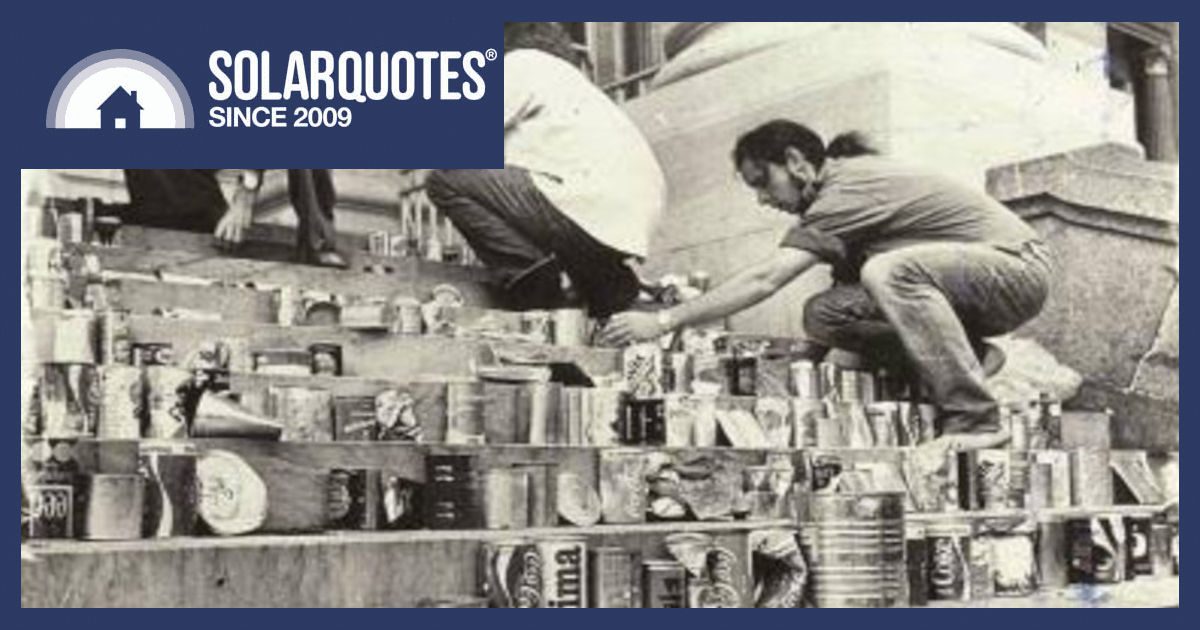
Half a century ago, South Australia virtually eliminated drinks container waste after protesters at universities successfully pushed the state government for a deposit system. For decades, collecting cans has put money into the hands of children and the homeless. To give the Boy Scouts and other community groups a reliable way to raise money from households and hospitality businesses through the donation of containers by ensuring waste is given value.
I remember first hand when 40 cent soft drinks had a 5 cent deposit, which doubled in 2008. If we kept up these days, a $3 can should cost 37.5 cents?
South Australia has a sustainable system because there is a waste stream sorted. It’s not curbside recycling full of mixed trash, so there’s real demand. People pay for a clean supply of plastic, cardboard and glass.
The same scrap yard, bottle depot or ship storage operation we already have just needs a place for solar equipment. Frames, stainless hardware, inverters and finally batteries – although they will be more difficult to handle properly.
Drive in here, empty your bags, boxes and containers and let the sorting begin.
These people count, sort, remove lids, and line up containers left, right, and center to land in bins, bags, and conveyors.
$10 per person would do it
Right now, used solar is pretty much worthless, but giving something a dollar value means people care about what happens to them. Nobody collects soda cans for the aluminum scrap value of 1 cent each, but the meth bosses will remove copper wiring and cables from your community center for $8 a kilo, so we have to choose a number in between.
The value has to be high enough to make people in the country pay a burden when they come to the city, but not lucrative enough to make theft attractive.
Like old car batteries, used solar panels will come out of the woodwork if we simply pay a reasonable bounty on them, which will likely need to be factored into the initial purchase price in the future. Boy Scouts, Boy Scouts, Rotary Clubs, and men’s shelters could all help collect, reuse, and recycle this hardware. We just need some realistic rules to work by.
Read more about the national solar panel recycling survey and recycled panel pilot project.

Comments are closed.