
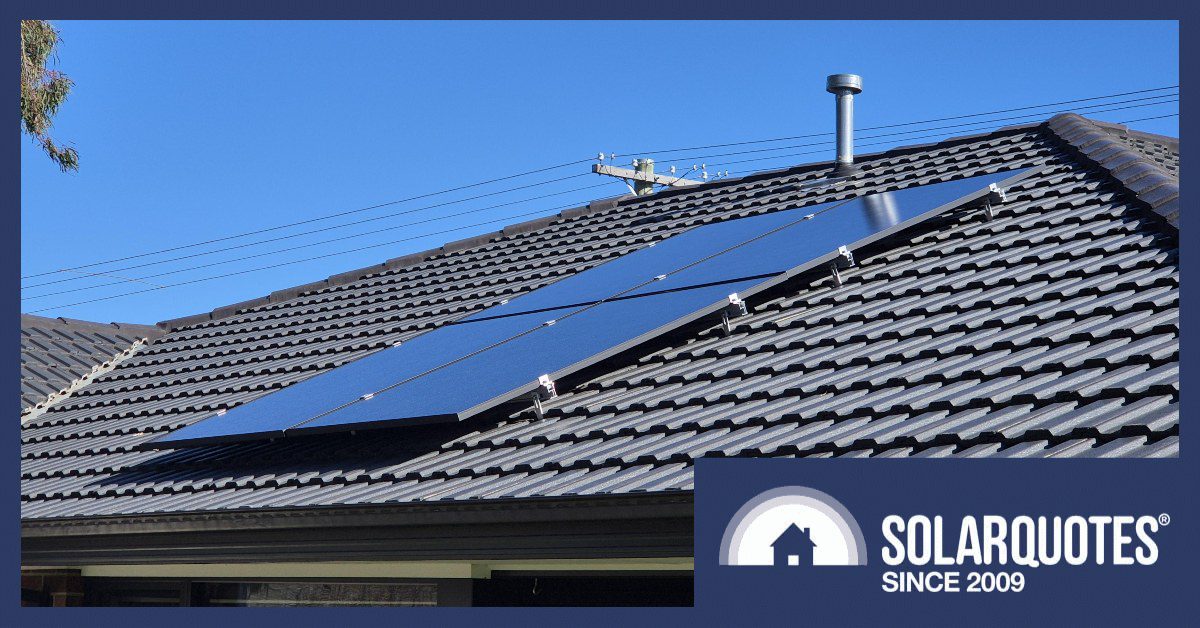

Solar panels installed by Limitless Energy.
When Australian households first started installing solar power, there were almost no restrictions on the amount of energy they could export back to the grid, and they received up to 60 cents per kWh for exporting. Today, we have millions of rooftop solar panels, providing more than 13% of the country’s electricity needs.
What are dynamic connections for solar?
Rooftop solar installations have delivered significant financial savings to households and reduced our greenhouse gas emissions, helping Australia lead the consumer-led transition to clean energy.
However, this is not without challenges, such as: B. increased energy exports during the day, causing electricity to flow in reverse, grid voltage rising, which can cause PV systems to shut down or shut down, and other power quality issues.
To address this, the concept of “dynamic connections” was introduced and implemented for the first time in South Australia. Also known as Dynamic operating envelopes (DOE) or Flexible export restrictions (FEL), they adjust the amount of solar energy exported to network conditions in real time.
Stop traffic jams on the highway
An analogy might be the ramp lights, which only allow a certain number of cars onto the highway during traffic jams. But if there aren’t many cars or the highway is big enough, the ramp signals don’t limit the number of cars flowing onto the highway.
Photo credit: Mainroads WA
So if too much solar energy is being exported (cars) in certain parts of the network (highway), operators can limit the number of solar exports from each system.
This concept can also enable a more equitable distribution of solar exports, helping more people install rooftop solar panels and export their excess energy. Imagine if all your neighbors had large solar panels, and when it’s your turn to buy one, the grid operators may refuse to let you export because the highway is already clogged and no new cars are allowed. With dynamic connections, networks can regulate solar exports and enable more households to own solar energy.
Dynamic connections can also help to completely stop solar export traffic in the event of a serious accident on the highway (network security and emergency events). This concept is known as Emergency anti-reverse mechanism.
Dynamic connections across different states
What does all this mean for you as an existing or new owner of a solar system?
For example, if you live in South Australia and want a new solar system or want to upgrade your existing system, the network (SAPN) offers you two options:
- They do not participate in the dynamic connection program and have a static export limit of 1.5 kW (so you cannot export more than this limit).
- You participate in the dynamic connection program and can export up to 10 kW of energy per phase, dynamically managed by the grid operator depending on grid conditions
According to data on new installations in South Australia, around 80% of households have opted into the dynamic connections program as of July 2023. If you purchased a system before July 2023 or have another existing export control device, the dynamic link rules will not apply to you until you upgrade or need to purchase a new system.
South Australia
- Starting in July 2023, all new systems or upgrades will require dynamic connection capability.
- Participating locations receive an export limit of up to 10 kW per phase.
- Sites can opt out and set a fixed static export limit of 1.5 kW.
- 80% of new installations have so far chosen dynamic connections.
NSW & ACT
- NSW plans to implement a similar strategy to South Australia, with rollout expected later this year.
- Participating sites are expected to receive up to 10kW of export power and non-participating sites are expected to receive a static fixed export limit of 1.5kW.
Victoria
- From March 2024, Solar Victoria will require all new systems claiming the Victorian rebate to have dynamic capabilities
- New systems that do not claim the Victorian rebate must still have the Victorian Backstop Mechanism (VBM).
- Most sites with dynamic connections are still configured for a static export limit of 5kW per phase, but will likely move to dynamic exports in the future
Queensland
- From February 2023, all new sites >10 kVA will be required to have a Generation Signaling Device (GSD), but no dynamic connection feature is currently required.
- GSD is a mechanism used for Emergency Backstop Mechanism (EBM).
- There is no mandate from the state government or DNSP for dynamic connections. Households can choose static fixed export limits (1.5 kW or 5 kW) or participate in dynamic connections (up to 10 kW export).
Western Australia
- Starting May 1, 2026, all new and updated systems must have dynamic connection capability.
- Participation is not mandatory; However, a smaller static export limit of 1.5 kW applies to locations that do not participate.
At the time of writing, I could not find any clear information on the implementation of dynamic connections in Tasmania and the Northern Territory.
However, in Tasmania the networks allow higher static export limits of up to 10 kW. Given the number of rooftop solar panels and relatively low solar radiation, dynamic interconnections may not be necessary in Tasmania.
In the Northern Territory, existing static export limits such as 5 kW or 7 kW apply.
How do dynamic connections work?
Dynamic connections use the Common Smart Inverter Profile-Australia (CSIP-Aus) communications protocol, an implementation of the international standard IEEE 2030.5.
This standard allows inverters to send and receive signals to and from the network servers in a standardized format. There are three options for communication between inverters and network servers:
- Relevant agents: Use an Internet-connected gateway device to communicate with network servers and use the inverters’ DRM (Demand Response Mode) ports to control them.
- Direct connection: Network servers can communicate directly with the inverter over the Internet using the CSIP-Aus communication protocol.
- Aggregator cloud (inverter manufacturer, dealer or energy company): Network servers communicate using the CSIP-Aus protocol with the aggregator cloud servers, which then control the inverters.
The following image shows these options (Reference: South Australia Power Networks Flexible Exports Trial):
In some states, dynamic connections can increase installation costs if they require additional hardware or labor.
What about shady internet?
Some of you may be wondering: All of these options rely on an internet connection. What happens if my internet connection is not reliable or the site/inverter may not be able to connect to the internet?
While the internet is down, systems must resort to a standard fallback option: a static export limit of 1.5 kW.
If your system does not have an internet connection, the static export restriction is required (remember this only applies to new installations or upgrades).
How about batteries?
Dynamic connections also apply to grid-connected battery systems. If you have a large enough battery, much of the excess solar energy will be used for charging, reducing exports. Therefore, static or dynamic export restrictions have less impact.
For more solar news, sign up for SolarQuotes’ free newsletter emailed to you each week.

Comments are closed.