

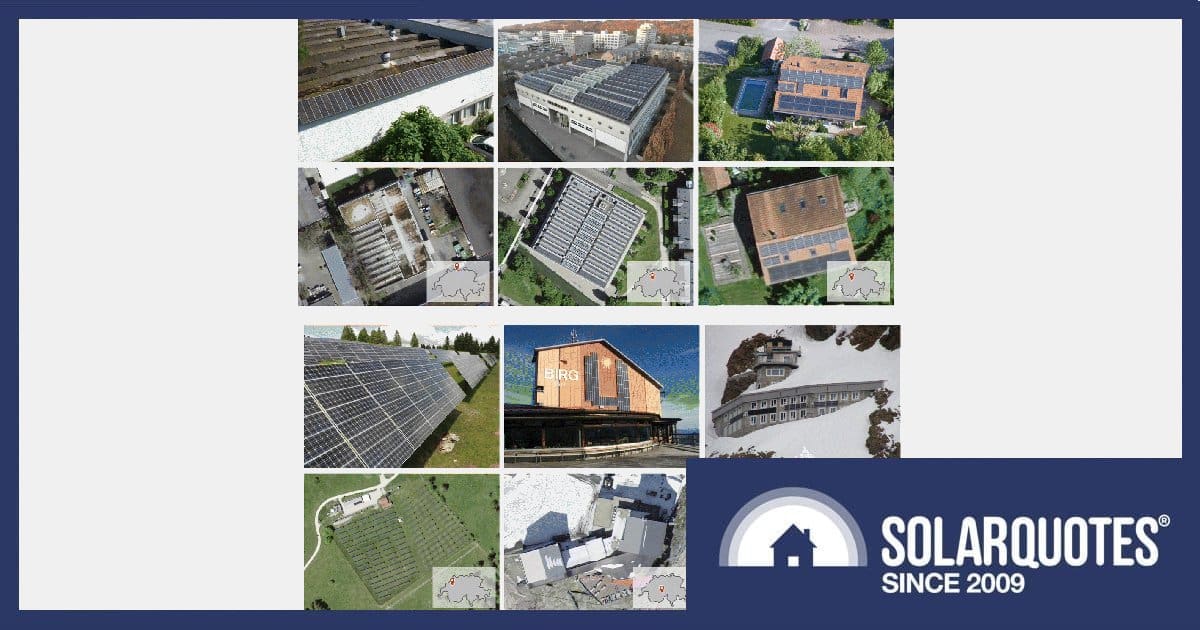

A series of solar panels installed in the 1990s were tested; The results suggest that the maximum degradation values specified in long performance guarantees are realistic.
What is the difference between a product guarantee and a performance guarantee?
A product warranty covers manufacturing defects (materials, workmanship). These days, most decent panels come with a 25-30 year product warranty.
The performance warranty (typically 25-30 years) is a separate coverage that refers to the remaining percentage of the module’s original power rating throughout the warranty period and with a maximum annual rate of degradation.
For example, the SolarQuotes solar panel comparison table shows that the Aiko Neostar 2S has a guaranteed performance of 90.6% in year 25 and a guaranteed annual performance loss of 0.35% per year in years 2-25.
Previously, solar panel product warranties were much shorter than performance warranties (e.g. 10 years instead of 25 years); and the performance guarantee was often viewed with a certain degree of suspicion as to the achievability of the numbers.
Researchers from Switzerland, Austria and Germany examined the long-term performance of six solar systems in Switzerland over a thirty-year period, obtaining high-quality monitoring data for more than 20 years of that period.
Which solar module brands have been tested?
All PV installations used modules from the same product family; These are ARCO AM55, Siemens SM55 (and the high-performance variant SM55-HO) and Siemens SM75. And all used Al-BSF cells.
All panels were manufactured and installed between 1987 and 1993. The maximum power rating of most modules was 55 watts (48 W for the SM75), with an open circuit voltage (Voc) of 21.7 V and a short circuit current (Isc) of 3.45.
Separate from the systems, two Siemens M55 (SM55) modules were also set aside. These were stored in a controlled indoor environment in the photovoltaics laboratory of the Bern University of Applied Sciences (BFH PV Lab).
“These unexposed modules serve as reference samples to evaluate material stability and possible aging effects independent of outdoor environmental influences,” explain the researchers.
Climate zones
The panel locations were divided into three climate zones; which were based on their altitude: low, medium or high altitude.
“Altitude is a main influencing factor for climate variability in Switzerland, as it has a significant influence on temperature, solar radiation and weather patterns,” explain the researchers.
The categories also corresponded to different Köppen-Geiger climate classifications for the locations.
Insights
In general, it looks like high-quality solar panels – at least those manufactured in the 1990s – can easily pass the performance guarantee sniff test.
Performance promises kept.
The modules had an average power loss of only −0.24 ± 0.16% per year. The performance guarantees of solar modules manufactured today often provide for an allowable loss of 0.35% – 0.50% per year in years 2 – 25.
Power delivery good
Measurements in the indoor laboratory confirmed that most modules retained over 80% of their original rated power after 30-35 years in the field. Today’s panels often promise a value in the range of 80% – 90%.
Thermal stress is a problem at lower altitudes
The researchers also discovered that higher thermal stress at low altitude system locations, where temperatures are up to 20°C warmer, leads to accelerated decomposition of the encapsulation material (adhesive) and the formation of acetic acid, leading to localized corrosion and higher performance losses.
Solar panels then and now
“These results highlight the durability of early 1990s module designs with EVA encapsulation, Tedlar backsheets, and robust framed glass/film structures that support lower levelized cost of electricity (LCOE), reduced carbon footprint, and extended performance guarantees,” the researchers explain.
Back in the 1990s, panels were a really solid thing in terms of frames and glass thickness. These components in more modern solar panels are much lighter and thinner. For example, the panels in the study had a front glass thickness of 3.3 ± 0.1 mm. Some of today’s solar panels may be as thin as 2mm, or perhaps even 1.6mm.
The EVA adhesive is still used today, but it appears that polyolefin (PO) encapsulations have recently gained market share, particularly in the production of bifacial TOPCon modules with glass front and back.
As for the use of Tedlar backsheets1, this material is still widely used and known for its durability.
A new hope?
Since solar technology has only advanced since these systems were installed, this seems to bode well for the extremely long product and performance warranties that come with panels today. The good solar modules anyway.
However, the researchers point out that most of the degradation pathways seen in advanced solar cell technology today, such as PERC, TOPCon and SHJ, are not present in the Al-BSF cells used in the old solar panels.
And what it doesn’t guarantee is that the companies that offer long warranties will stay loyal long enough to honor them. Example: Siemens no longer directly manufactures solar panels as it stopped manufacturing them between 2012 and 2013 due to market challenges.
Another crucial factor for a good solar panel is its good installation. Poor installation can ruin the best equipment.
But the researchers say the analysis they conducted remains critical to driving improvements in solar panel design, manufacturing standards and sustainability.
“Ultimately, well-designed modules and systems have the potential to perform well beyond traditional warranty periods, contributing to lower LCOE, a lower carbon footprint and a longer lifespan for PV systems.”
If you would like to delve into the details of the study, you can access it here. But maybe pack a lunch first; It will take a while.
The oldest working solar panel system in the world?
The oldest functioning solar system that I have come across so far is also in Switzerland. The 10 kW system “TISO 10 kW” was installed in Lugano in 1982 and was also the first grid-connected PV system in Europe. So that’s 43 years of operation.
The power of this system of 10 kW was huge for the time. Today, many Australians are having 10kW solar power systems installed on their roofs for pennies of the 1980s solar dollar.
Related:
Footnotes
- Tedlar is the trade name that DuPont uses to market, sell and support these backsheets – and they are the only ones allowed to sell under the Tedlar name. ↩

Comments are closed.