

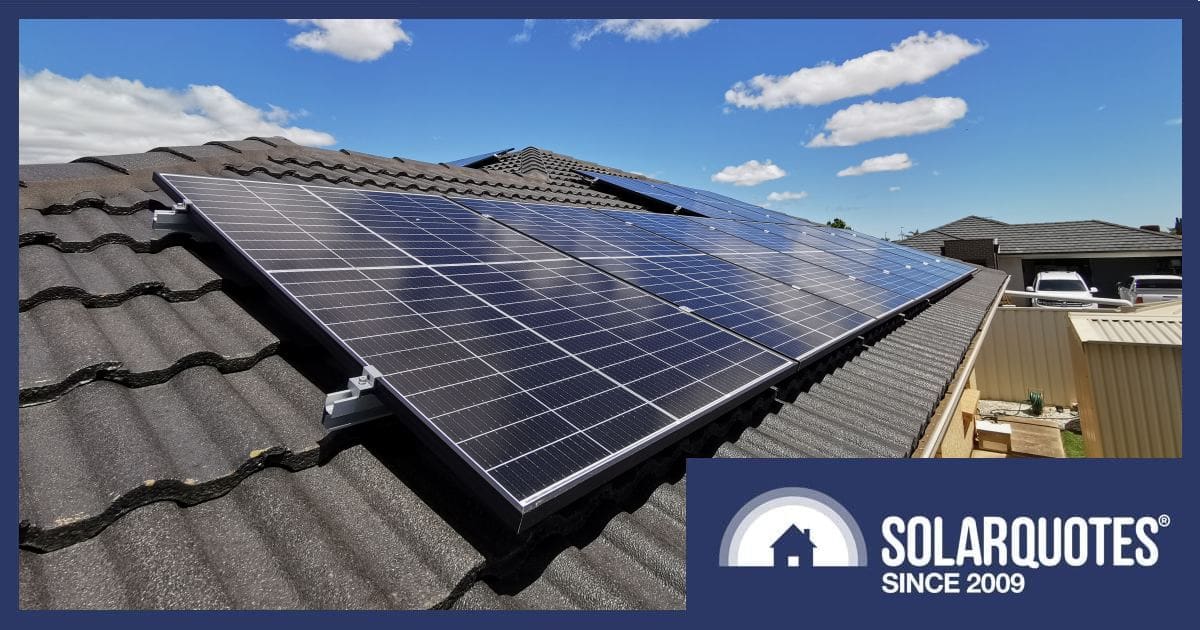

On Christmas Day 2025, millions of rooftop solar panel systems installed across Australia have done their part to make the electricity used during the festivities cheaper and greener for all, with impressive contributions to grid exports. Adding to this important contribution was a range of shiny new home batteries which saw their first Christmas run.
How much did rooftop solar contribute to grid demand?
According to OpenElectricity, as of December 25, 2025, the total contribution to demand in the overall national electricity market (NEM1) from rooftop solar alone (excluding utilities/large systems) was 21.5%. This sold at an average (and negative) spot price of -$54.76 per megawatt hour on the wholesale market.
At 21.5%, the contribution was not quite as high as on Christmas Day 2024, which was 22.9% of total demand. The NEM’s peak contribution this year was 50.3% at 1pm AEST.
State contribution
For each state, the contribution over the entire day, followed by peak values and times at which they occurred:
- Queensland: 17.6% and 40.7% at 11am AEST
- New South Wales/ACT: 20.4% and 51.4% at 12pm AEST
- Victoria: 25.6% and 64.0% at 2pm AEST
- South Australia: 43.9% and 107.9% at 12:30pm AEST
- Tasmania: 8.1% and 22.5% at 1pm AEST.
- Western Australia: 22.7% and 52.1% at 11:30 a.m. AWST (Note: Western Australia is not part of the NEM, but OpenElectricity includes WA figures.)
- No numbers for NT (not covered).
And in a graphic:
Based on the amount of solar energy swallowed by the grid that day (all regions except NT), this amounted to 135 gigawatt hours.
Solar use on roofs in 2025
While the solar power system installation numbers for 2025 will not be finalized for some time and the subsequent total will be significantly higher, the Clean Energy Regulatory Authority (CER) reports that 221,713 solar systems with an output of less than 100 kW have been installed this year through November 30, 2025; compared to 319,044 for all of 2024.
To give just an indication of how high the number could eventually rise in 2025, when I reported the 2024 tally on December 26 last year, the total at that point was just 267,000 systems – ending at the 319,000 mark for the year when the dust had settled around the permitted registration period. But even though the total will increase significantly in 2025, it looks like installations this year may be down a bit compared to last year.
The year with the highest installations in Australia was 2021 with 377,458. Although annual figures have been lower since then, the size of installed systems has increased from an average of 8.8 kW capacity (source: APVI) in 2021 to a rolling average of 10.2 kW for the period January to June 2025 (source: CEC).
Since 2001, more than 4.264 million home solar systems have been installed nationwide.
What will the use of home batteries look like in 2025?
The big story for home electrification in 2025 was the launch of the Albanian government’s Cheaper Home Batteries Program (CHBP). The official launch took place in July this year and, according to the Clean Energy Regulator, 125,447 solar battery systems have been installed and registered since July to November 30, 2025.
But thousands of systems that have already been installed are currently going through the registration pipeline. On December 13, Federal Minister for Climate Change and Energy Chris Bowen said:
“163,016. This is how many Australian households have installed a battery since July 1.”
Almost 75,000 home battery systems were sold in Australia in 2024, up from 46,127 in 2023; In total, there were 185,798 devices installed across Australia by the end of last year (source: CEC). And after six months of CHBP, some forecasts put the total number of plants installed/commissioned since July 2025 at 175,000; This corresponds to a total of around 3.9 GWh of usable capacity.
“To put that in context,” the CER said on December 10, “that is more capacity than the five largest utility-scale batteries currently operating in the National Electricity Market (NEM) – and all of the capacity was installed in just six months.”
Added to this were the systems installed at the beginning of the year that were not covered by the CHBP; Therefore, it is entirely possible that the 2025 total will dwarf the cumulative number of batteries installed in previous years.
Not only was it a great success in terms of numbers, the installed battery capacities have also skyrocketed as part of the CHBP: from 10 – 12 kWh in 2024 to ~28 kWh since October of this year2.
Demand is so great that changes are being made to the battery allowance to ensure it can continue as planned in 2030. There will be accelerated battery allowance cuts and other optimizations, but many more Australian households will benefit from the CHBP and the additional capacity will bring further benefits to the wider network.
Go solar in 2026: Start preparing
While many solar installers take a break over the Christmas/New Year period, you can find out everything you need to know about solar installation in our 101 guide. ready to make inquiries and get quotes when back on deck. For existing solar owners considering maximizing home consumption using home energy storage, check out our comprehensive guide to home batteries.
With continued generous solar panel rebates, battery subsidies and low solar panel prices, 2026 will be another great year for Australian households to begin or continue on the home electrification journey.

Comments are closed.