

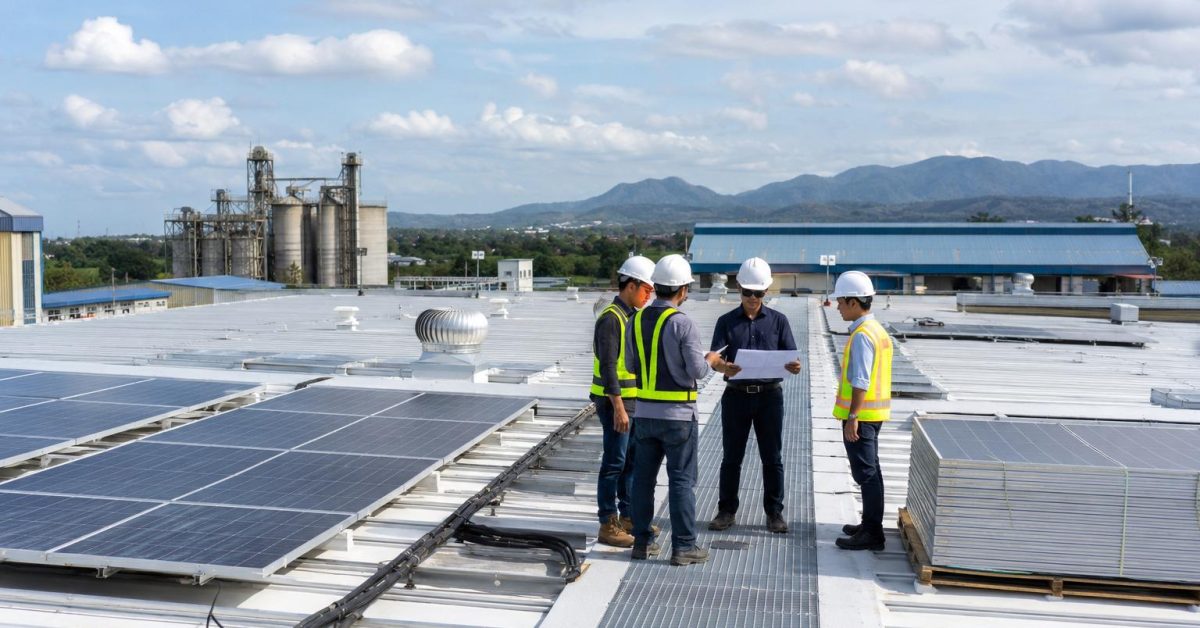

What are the requirements for an efficient industrial solar system?
- Detailed overview of power consumption
- Roof condition and static assessment
- Correct system sizing for day-to-day operations
- High-quality solar modules, inverters and mounting systems
- Compliant electrical planning and installation
- Net metering and utility connection planning
- Monitoring, guarantee and customer service
overview
- Industrial facilities need solar power systems that match their actual operating load, not just the available roof space.
A proper site assessment helps avoid common problems such as underperforming systems, roof restrictions, unsafe wiring and utility permitting delays. - Solar panels, inverters, mounting systems and monitoring tools must be selected based on long-term performance and Philippine operating conditions.
- For factories, warehouses, logistics centers, schools and industrial buildings, the right solar system can help reduce dependence on the daily grid and help control operating costs.
Industrial facilities use electricity differently than private households and small offices. In a factory, production equipment, air compressors, ventilation systems and lighting can operate for hours. A warehouse may rely on material handling equipment, refrigeration systems, security systems and office procedures. For this reason, industrial solar installation requires more detailed planning.
The goal is not simply to install as many panels as possible. The goal is to design a solar power system that fits the system’s roof, energy needs, electrical equipment, safety requirements and long-term savings goal.
For this reason, it is important to understand the requirements for an efficient industrial solar system before requesting a quote or approving a system design. Proper preparation will help reduce delays, avoid costly rework, and improve long-term solar performance.
Detailed check of power consumption
The first must is a clear overview of the system’s power consumption. Industry decision makers should first review at least 12 months of electricity bills to understand monthly consumption, peak demand, seasonal changes and daytime operating patterns.
This is important because solar energy produces the most electricity during the day. Systems that operate heavily during the day could be good candidates for grid-tied solar because they can use solar power as it is being generated.
A proper consumption audit should take into account:
-
- Average monthly electricity consumption
- Day and night stress
- Peak demand times
- Devices running during solar production hours
- Planned expansion or future use of machines
Without this step, the system may be too small, too large, or poorly tailored to actual operations.
Roof condition and structural assessment
Industrial roofs often offer plenty of space for solar panels, but not every roof is automatically ready for installation. The roof must be inspected for strength, condition, access and layout before system planning begins.
A roof inspection should examine roof material, age, waterproofing status, shading, slope, orientation and available installation space. Structural capacity is also important as the roof must support the solar panels, mounting system, workers and wind loads.
This step will help avoid problems mid-project. If the roof needs to be repaired or strengthened, it is better to identify the problem before starting installation. For industrial buildings, early roof planning also helps avoid conflicts with vents, skylights, exhaust systems, walkways, water tanks and other rooftop equipment.
Correct system sizing for day-to-day operations
System sizing should be based on power requirements, roof area, budget and net metering suitability. For industrial plants, the best system is not always the largest. It is the system that can produce usable energy during the hours when the facility needs it most.
A warehouse that operates primarily during the day may benefit from a larger, on-grid facility. A facility with high nighttime demand may require a different design approach, particularly if backup power or battery storage is part of the long-term plan.
Proper sizing helps improve return on investment because the system is designed for actual use. It also helps avoid excess generation that the facility cannot fully utilize or export efficiently.
Solaric’s industrial solar installation service supports facilities that require solar planning based on industrial needs, operating conditions and long-term energy goals.
High-quality solar modules, inverters and mounting systems
An efficient industrial solar system depends on the quality of the entire system, not just the modules. Solar panels, inverters, mounting systems, cabling and protection devices must work together.
Solar panels should be selected based on performance, durability, warranty and suitability for Philippine weather conditions. Inverters should be properly matched to the system size and facility load as they convert DC power from the panels into AC power used by appliances and building systems.
The mounting system is equally important. Industrial roofs can be exposed to intense heat, heavy rain and typhoons. A weak or poorly installed mounting system can compromise safety, roof condition and long-term performance.
For comparing options for commercial properties, Solaric’s commercial solar panel systems page provides a useful reference on how solar energy can support operational savings and the use of clean energy.
Compliant electrical planning and installation
Industrial solar installation requires more complex electrical work than residential projects. The system must be securely connected to the facility’s existing electrical infrastructure, which may include larger electrical panels, transformers, multiple circuits, and higher load requirements.
A reliable installation plan should include safe wiring routes, proper grounding, protective devices, inverter placement, and access for maintenance. Consideration should also be given to how the solar power system interacts with the building’s electrical load during daily operation.
A compliant installation helps reduce safety risks and supports smoother coordination of utilities. It also protects the system from preventable problems such as overheated cables, poor connections, unstable output or failed inspections.
Solaric’s solar installation services include solar solutions for residential, commercial and industrial properties in the Philippines.
Net metering and utility interconnection planning
Net metering is another important must for many grid-tied industrial solar projects. Under the Philippine net metering framework, qualified end-users can generate renewable energy for their own use and feed unused electricity into the grid in exchange for credits.
For industrial facilities, net metering can be useful when solar energy production is limited at certain times, such as: B. weekends, holidays or days with lower production, exceeds the system consumption. However, it requires proper documentation, technical review, utility coordination, and interconnection approval.
Early planning for net metering helps avoid delays. Technical documents, circuit diagrams, inverter details, system capacity and protection devices should be properly prepared before submission.
Solaric’s Net Metering Guide provides additional information on how the process works for solar users in the Philippines.
Monitoring, guarantee and customer service
The final must is long-term support. Industrial solar power systems should not be treated as one-off installations. They require monitoring, maintenance, inspections and warranty support to continue performing well.
Monitoring helps facility managers track energy production and identify performance issues early. If performance drops due to dirt, shading, inverter problems or wiring problems, the system can respond before savings are affected.
Warranty and after-sales support should also be clear before installation begins. Industrial buyers should inquire about equipment warranties, workmanship coverage, maintenance schedules, monitoring facility and response times for service issues.
Solaric’s content on rooftop solar shows how rooftop solar can support homes and businesses looking to reduce their electricity costs and use available roof space more productively.
Key to take away
The indispensable requirements for an efficient industrial solar system include energy load assessment, roof structure inspection, accurate system sizing, quality equipment, safe electrical design, net metering preparation and reliable customer service.
For industrial facilities, solar should be planned as a long-term energy investment. A well-designed solar power system can help reduce reliance on the daily grid, improve energy cost control, and support sustainability goals without impacting daily operations.
Are you ready to plan the right solar power system for your facility? Ask Solaric to assess your industrial energy needs and request your free solar quote today.

Comments are closed.