

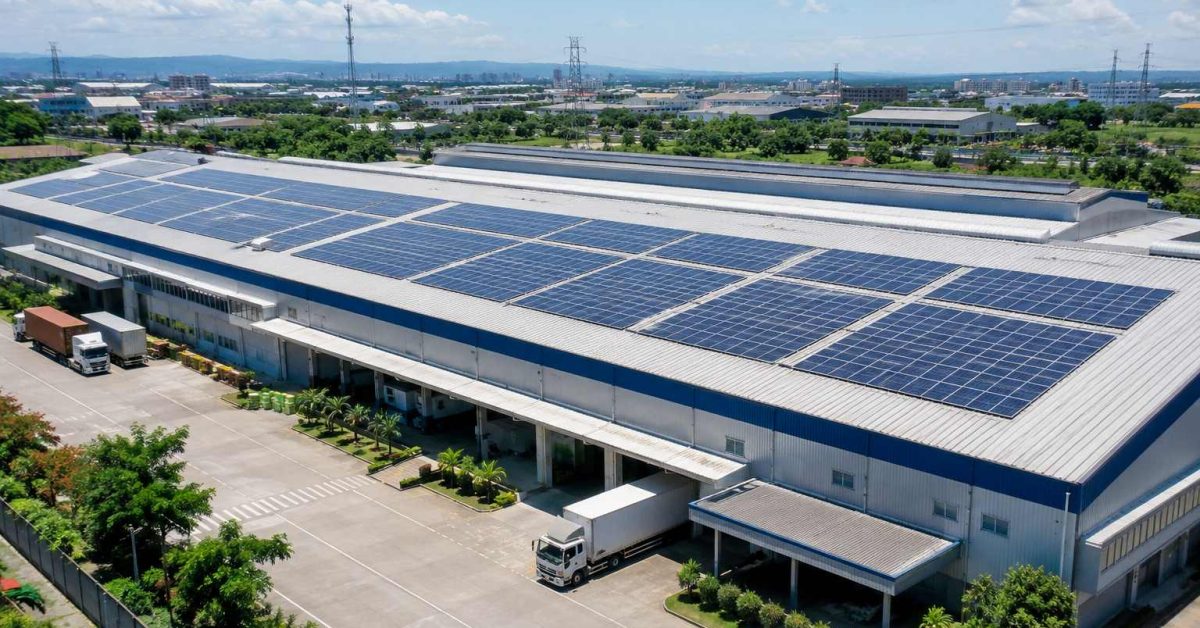

What are the key ways solar solutions support industrial operations?
- Solar panels generate electricity during the day.
- Rooftop solar systems use unused roof space without taking up production space.
- Grid-tied systems can reduce dependence on the power grid.
- Net metering can provide credits for excess solar power that is fed into the grid.
- Proper design helps align solar production with actual industrial energy needs.
overview
- Industrial facilities often experience high power demands due to machinery, lighting, ventilation, refrigeration, and daily production needs.
- Solar power systems can help reduce operating costs by generating electricity during the same hours when many facilities use the most electricity.
- Rooftop solar systems are practical for industrial properties because warehouses, factories, and factories often have large roof areas that allow for the installation of solar panels.
- For long-term performance, the solar power system must be planned according to the system’s load profile, roof condition, inverter capacity, electrical layout and net metering suitability.
Industrial companies rely on reliable energy. A factory cannot afford unnecessary downtime. A warehouse requires constant lighting, ventilation and the use of equipment. A food processing plant or cold storage facility may require electricity for refrigeration, refrigeration, and continuous monitoring. As electricity costs rise, this daily demand can put pressure on operating budgets.
For this reason, many industrial plant managers consider solar power as a practical energy strategy. Solar energy does not replace operational planning, preventative maintenance, or utility coordination, but it can help reduce the amount of electricity drawn from the grid during the day. For systems with large roofs and constant daily loads, the savings potential can be significant.
How solar solutions support operations in industrial plants depends on the right design. The system should not be based solely on the roof area. This should take into account how the system uses electricity, when it uses the most electricity and which devices need to be supported during operating hours.
How solar helps reduce daytime electricity costs
Industrial plants often use the most electricity during the day. Production lines, air compressors, conveyor systems, lighting, computers, refrigeration equipment and HVAC systems can all run as long as the sun shines. This creates a strong match between solar generation and system requirements.
A grid-connected solar power system feeds solar power directly into the system’s electrical system. When the modules produce electricity, the system can first use this electricity before drawing further electricity from the grid. This helps reduce grid dependency during operating hours and can reduce monthly electricity costs.
This is particularly useful for factories and warehouses, as operations are typically active when solar production is at its peak. Instead of leaving the roof unused, the system can transform this space into a source of clean electricity.
Solaric’s commercial solar panel systems are designed for commercial properties looking to reduce operating costs and improve long-term energy control. For industrial buildings, this can support both financial and sustainability goals.
Why solar systems on roofs are well suited for industrial systems
Many industrial properties have large, open roofs. Warehouses, manufacturing facilities, distribution centers, logistics centers, and processing facilities often have large roof areas that may be suitable for installing solar panels.
This is one of the reasons why rooftop solar systems are well suited for industrial operations. This allows the facility to generate electricity without taking up additional land, reducing parking requirements, or impacting production activities. Because the panels are installed on the roof, the daily movement of workers, machinery and inventory can continue with minimal disruption.
However, the suitability of the roof must be checked before installation. The roof must have sufficient usable space, adequate structural support, limited shading, and safe access for installation and maintenance. Roof material, slope, orientation and existing equipment such as vents or water tanks can also affect the final design.
The Solaric Rooftop Solar Guide explains how homes and businesses with suitable roof space can benefit from solar energy, including facilities such as factories, warehouses, office buildings, schools and hospitals.
How net metering supports better energy value
Net metering can further increase the value of a grid-connected solar system. Under the Philippine net metering framework, eligible electricity end-users can generate renewable energy for their own use and feed unused electricity into the grid in return for credits.
This can be useful for industrial facilities if solar production temporarily exceeds local demand. For example, a warehouse may have lower consumption on weekends, holidays or certain operating shifts. If the system is properly approved and connected, excess solar power can be fed into the grid instead of sitting idle.
Meralco’s net metering process includes connection testing and the installation of a bi-directional meter that measures both imported and exported electricity. This helps ensure the facility’s solar PV system is securely connected to the power grid.
Facilities planning a solar system should not view net metering as an afterthought. Application requirements, system capacity, technical documents, electrical diagrams, and utility coordination should be considered early in the project.
Solaric’s Net Metering Guide provides helpful information on how the process works in the Philippines.
What facility managers should evaluate before installation
Industrial solar planning should start with a clear review of electricity consumption. The first step is to examine at least 12 months of electricity bills to understand average consumption, peak demand and seasonal changes. A system that is heavily used during the day can benefit more from solar energy than a system that is primarily used at night.
The next step is to inspect the roof. The roof should be strong enough to support the panels, mounting system and installation work. There should also be enough clear space to allow for proper layout of electrical panels, safe walkways and maintenance access.
The solar provider should then check the system’s electrical system. This includes the main distribution board, transformer capacity, inverter location, cable routes, protection devices and grid connection requirements. Industrial facilities may have more complex electrical systems than private homes or small offices, so technical accuracy is important.
A proper site assessment helps determine the correct system size, equipment configuration, and installation plan.
Solaric’s industrial solar installation service can support facilities that require a solar power system tailored to industrial needs.
Important equipment considerations for industrial solar systems
Solar panels are only part of the system. In industrial facilities, the entire facility must work together to ensure safe and reliable performance.
Solar panels
Panels should be selected based on performance, durability, warranty, and suitability for Philippine weather conditions. Because industrial solar energy is a long-term investment, the quality of the panels is critical for consistent production over time.
Inverter
Inverters convert the direct current generated by solar panels into alternating current that is used by the system equipment. For larger industrial facilities, the size and placement of the inverter are important as they impact conversion efficiency, system stability and maintenance access.
Mounting system
The mounting system secures the panels to the roof. It must be compatible with the roof type and strong enough for local weather conditions. Poor installation can lead to safety issues, roof damage or reduced performance.
Surveillance system
Monitoring helps facility managers track solar production and identify performance issues early. This is useful for industrial operations as lower than expected production can impact projected savings.
Why solar planning should start early
For new industrial developments, solar planning should begin in the design phase. Roof alignment, structural support, cable runs, inverter rooms and electrical facilities can be planned before construction is completed. This makes future installation easier, cleaner and more cost-effective.
For existing systems, solar planning should begin before major roof repairs, electrical upgrades or expansions. This allows the facility manager to balance solar design with building improvements and long-term operational goals.
Early planning also helps avoid layout conflicts. Industrial roofs may already have vents, skylights, exhaust systems, walkways, and mechanical equipment. If solar energy is considered too late, the usable roof area can be reduced.
Key to take away
How solar solutions support operations in industrial facilities depends on energy savings, roof space utilization, reduction in grid dependency and long-term operational value. For factories, warehouses, logistics centers, schools and manufacturing facilities, solar energy can help balance daily electricity consumption while supporting cleaner and more sustainable operations.
You will achieve the best results with proper planning. Facility managers should review power requirements, roof condition, inverter capacity, electrical layout and net metering requirements prior to installation. With the right design, solar energy can become a practical part of an industrial facility’s cost control and sustainability strategy.
Are you ready to plan the right solar power system for your facility? Ask Solaric to assess your industrial energy needs and request your free solar quote today.

Comments are closed.