
One of the biggest challenges for AI data center operators is managing the high cost of their electricity needs while remaining profitable. Even small and medium-sized AI facilities could face major problems as electricity costs continue to rise and tariffs become more volatile. The increasing strain on the network from AI will also likely lead to more instability, leading to more frequent power outages and blackouts that make normal operation of a data center impossible. These concerns make strategic energy planning a must for every data center. They also explain why more and more facilities are turning to commercial solar solutions to meet their high energy needs.
How energy demand impacts solar system planning for AI facilities
A commercial solar system requires a significant investment and strategic system planning is crucial to ensuring it pays off. Even a smaller solar system can help an AI system reduce its energy costs and increase its profits. But the more electricity a system can generate with its solar system, the more the investment will pay off in the end. At the same time, you don’t want to install much more capacity than your data center currently needs. Even if your system participates in a net metering program that credits you for the excess electricity generated by your solar panels, you may never fully recoup your costs if the system is much larger than you need.
Scalability should be a primary goal of all AI centers. As technology continues to evolve, most AI facilities undergo regular upgrades to increase their data output capacity. The problem is that more advanced AI chips further increase a facility’s energy requirements. This is another point that you should always consider when planning a commercial solar installation so that you can more easily grow your business without the higher energy demands and rising electricity costs limiting your profits.
The first step in solar system planning is to determine the energy requirements of the data center. All you have to do is look at your total energy consumption over the last one to two years. You can then average the usage to get an idea of how much capacity you need to meet most or all of your energy needs.
Why battery storage should be part of the evaluation process
AI hardware typically uses at least five to eight times as much power as traditional servers and requires continuous power around the clock. Even small downward fluctuations in the power supplied by the grid can significantly reduce a data center’s performance, resulting in lost revenue. An even greater concern is the increasing frequency of power outages due to extreme heat and storms, which are causing data centers to shut down.
Commercial battery storage is a must for AI facilities. It makes a solar system more robust and resilient, meaning systems are much more reliant on clean, free energy and less reliant on the grid. It also ensures that AI assets can continue to operate during an outage and there are fewer interruptions due to grid fluctuations.
How much battery storage a system needs depends on the size of its solar system and its energy requirements. If you plan to rely primarily on solar energy, the battery storage capacity should be at least two to three times greater than your system’s daily energy needs.
What to consider before installing a commercial solar system on a high-stress property
When planning commercial solar systems for AI data centers and other facilities with high energy requirements, feasibility is always at the forefront. Not all locations are suitable for solar panels due to size limitations, orientation, shading from nearby properties, or various other issues. If the solar modules cannot provide anywhere near full performance when the sun is shining, it will take much longer for the system to pay for itself. Therefore, it is important to hire an experienced contractor to conduct a site and feasibility assessment. This makes it easier for you to determine whether investing in a commercial solar system is worth it and which location and orientation the solar modules generate the most energy from.
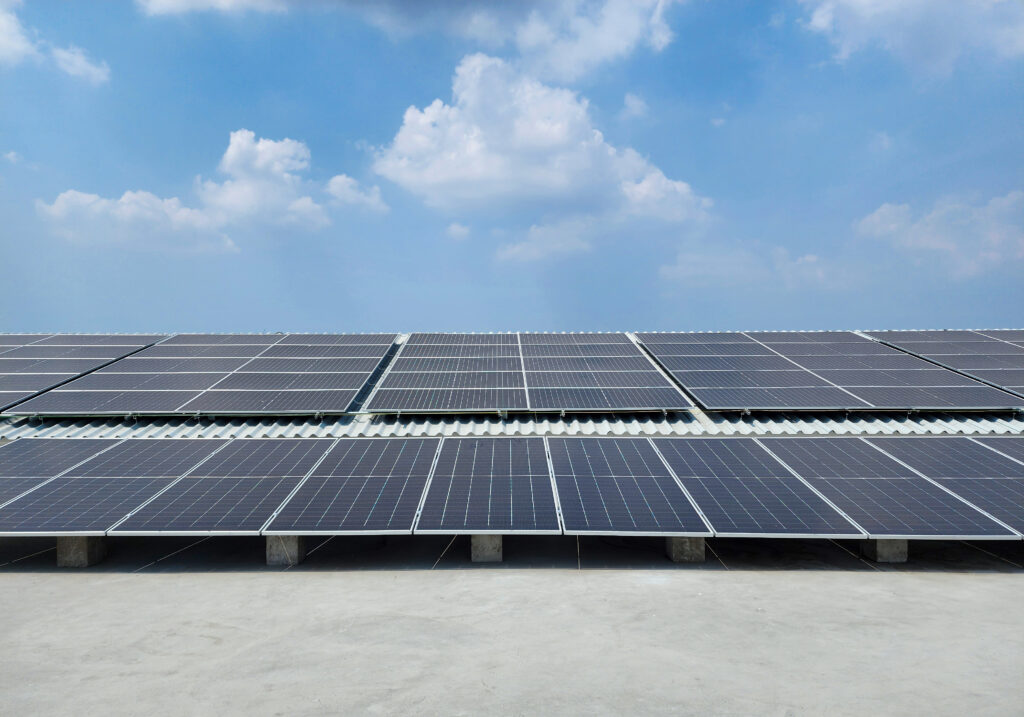
Many smaller data centers can take advantage of roof-mounted solar panels. However, it is still necessary to strategically plan their location. In particular, you need to take into account anything that casts shadows on parts of the roof during the day. Examples include HVAC equipment on roofs, chillers and generators. It is also necessary to assess the structure of the roof to determine whether reinforcement is required to support the weight of the solar array.
Larger data centers with higher energy requirements may require at least several hundred acres of sunny land for ground-mounted modules if they want to meet their energy needs almost exclusively with solar energy. This is another important consideration when deciding whether a solar system is sustainable and worthwhile. If you need to buy or lease the land for installation, the additional cost could make a smaller rooftop solar system a more sensible investment. This depends on the cost of the property and how much your facility pays for electricity.
Why the right commercial solar partner is important
Choosing the right trading partner for your solar system is key to getting the most out of your investment and ensuring the installation goes smoothly. At Solar Liberty, we are committed to offering customized solar solutions that perfectly fit every situation.
Why should you choose our team for your installation? First of all, we are the largest solar installer in New York and also manage many small and medium-sized commercial solar projects in Ohio, Pennsylvania, Virginia and several other states. Our proven track record and decades of industry experience enable us to offer turnkey solar solutions that fully meet each customer’s specific power needs.
To schedule a consultation and learn more about your commercial solar options, contact Solar Liberty today.

Comments are closed.