

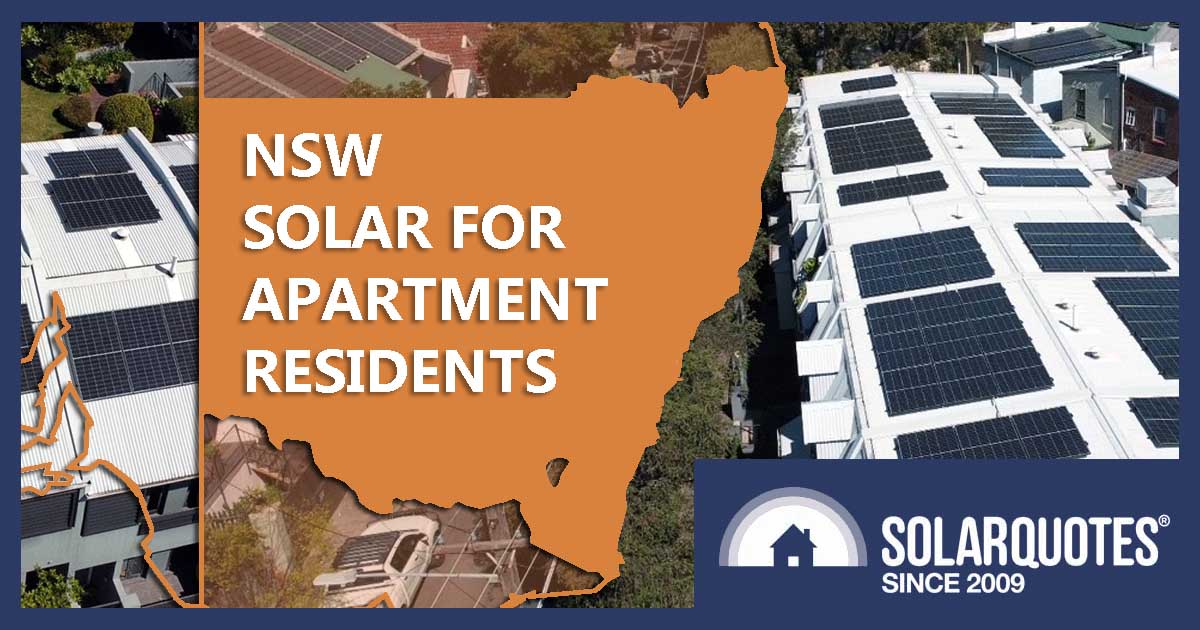

The first shared rooftop solar panels under the NSW Solar for Apartment Residents (SoAR) program have now been completed. Projects in Newtown and Camperdown are already delivering savings for residents. With the grant expiring on March 30, 2026, homeowners and strata committees only have a few days left to secure funding under the program.
Can Apartment Solar finally crack the “too hard” basket?
For years, rooftop solar energy has largely ignored residential residents. The division of property, the complexity of the billing and the limited roof space make it far more difficult than with individual houses. But two recent installations in Sydney’s inner west suggest this may be starting to change.
The Newtown and Camperdown projects completed under the NSW Federal SoAR grant program use shared solar systems to distribute rooftop electricity generation across multiple units – without the need for embedded networks or changes to residents’ existing electricity meters.
In a 22-unit building in Newtown that was reportedly the first rooftop solar system to go live under the SoAR grant program, Solahart installed a 52 kW system, with about half of the upfront costs covered by the grant. Apartment owner Veronica Tseng-Donald said the project only became viable once the grant became available:
“The cost and shift complexity proved too much of a challenge,” she said.
The Newtown system uses 104 Solahart premium panels paired with a GoodWe inverter and is fully battery ready, allowing storage to be added later.
“Residents now save approximately $440 to $800 annually on energy costs, with the system saving 38.2 tons of CO₂ each year,” said Stephen Cranch, general manager of Solahart Industries.
A second system at a heritage-listed Camperdown complex – covering six shift schedules and 13 residents – was also installed by Solahart and uses 54 modules with an output of 25.9kW. Like Newtown, it is battery ready for future storage. Cranch added:
“Residents of The Gantry are expected to reduce their annual energy costs by an average of 35 percent and save 20.3 tonnes of CO₂ emissions each year.”
What makes this possible?
Allume’s SolShare system allows apartment complexes to share the benefits of their building’s solar energy.
A key factor in both projects, including the Newtown and Camperdown installations, is Allume Energy’s SolShare system. It allows for equitable distribution of rooftop electricity generation across individually metered apartments without requiring changes to residents’ existing electricity meters.
In simple terms, the system distributes solar energy in real time to units that are actively consuming electricity. When multiple apartments receive electricity, the available solar energy is shared between them, helping to spread the benefits across the building – although households with higher daily consumption tend to benefit the most.
The SoAR program has also helped transform the economic landscape. With grants covering up to 50% of installation costs (maximum $150,000), the upfront financial hurdle – often the biggest hurdle in obtaining strata approval – is significantly reduced. In the case of Newtown, the building was able to cover its share of the system with existing investment funds, meaning residents did not have to pay additional one-off charges.
A working model – but still in its infancy
These installations in Newtown and Camperdown are among the first completed projects under the SoAR program, which has now awarded a total of $6.1 million in funding to 138 recipients.
Residential solar still depends on several favorable conditions:
- Sufficient shared roof space
- A cooperative ownership company
- Daily power consumption that captures the sun
Even with improved technology, these factors will not be reflected in every building.
What happens next?
There’s a timing factor: The SoAR program – which was previously extended to give applicants more time – now ends on March 30, 2026, just as these first projects show what’s possible for residential solar. With only a few weeks left to apply for funding, homeowners and strata committees need to act quickly.
These projects show that rooftop solar can work in multi-unit homes, but rollout to the millions of Australians who live in apartments is still a work in progress. Whether shared solar becomes mainstream may depend on what follows the end of the SoAR program.
Want to understand how shared solar energy works in homes? Check out our solar guide for units and strata buildings.

Comments are closed.