

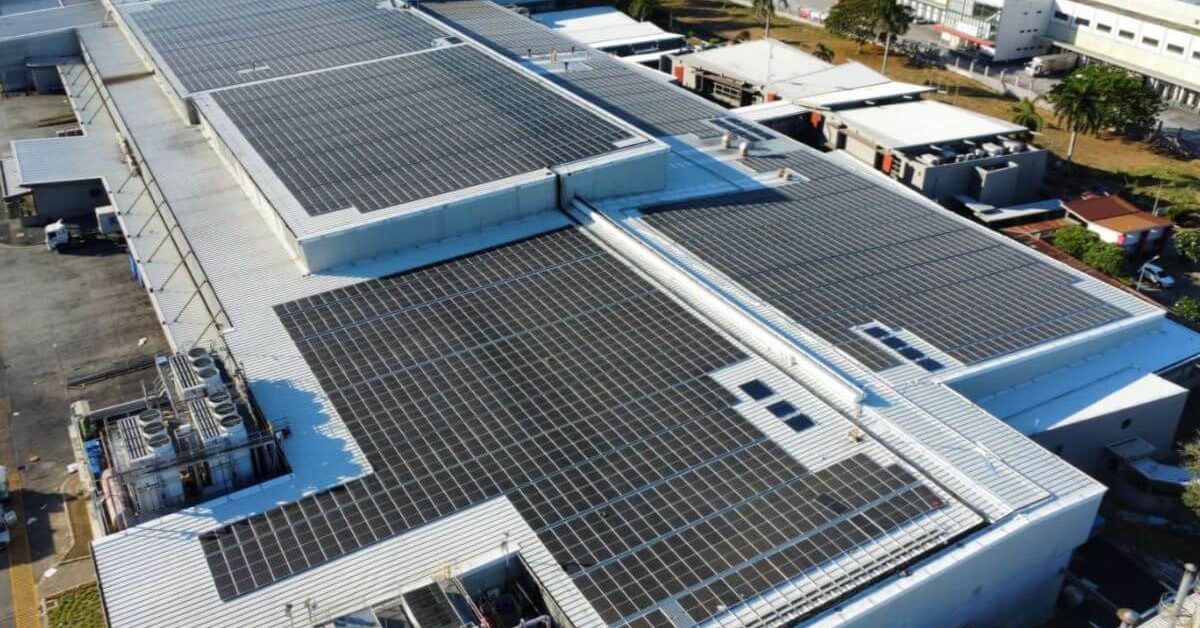

How does solar energy for factories help reduce operating costs in the long term?
- Reduced electricity bills
- Protection against price volatility
- Low maintenance costs
- Government incentives and tax credits
- Monetization of excess energy
- Increased operational resilience
- Increased property value
overview
- Rising electricity costs threaten the profitability of factories and make solar energy a strategic solution.
- Adopting solar energy helps manufacturers reduce their electricity bills, stabilize long-term energy costs, take advantage of government incentives, monetize excess energy, and strengthen operational resilience.
- These investments support sustainable growth, increase asset value and improve competitiveness in an increasingly cost-conscious, environmentally focused market.
Fluctuating electricity rates and rising electricity bills can put pressure on budgets and reduce factories’ profitability over time. So, learning how solar energy factories help reduce operating costs in the long term provides a practical solution for companies seeking both financial stability and sustainable operations.
Solar energy reduces dependence on the grid and provides predictable, lower-cost electricity over time. This article explains how adopting solar power helps factories control their energy costs, improve efficiency, and reinvest savings into long-term growth, making it a strategic choice for forward-thinking manufacturers.
Reduced electricity bills
By switching to solar energy, factories can generate a significant portion of their electricity on-site. This shift not only offsets a large portion of the monthly utility costs, but can even eliminate them.
Industry reports show that large systems often achieve a 30-50% reduction in energy costs through the use of solar solutions. For example, manufacturers like RPMC have achieved savings of up to 50% through net metering on rooftop systems, proving that solar energy is not only sustainable but also financially transformative
Protection against price volatility
Unlike traditional energy sources with fluctuating costs, solar energy offers a predictable cost structure that can remain stable for decades, reducing vulnerability to changing market conditions.
This predictability supports long-term financial planning and provides a hedge against price increases, allowing factories to maintain stable production without being severely affected by rising operating costs.
Low maintenance costs
High-quality and properly installed solar panels are extremely durable. Due to this reliable function, minimal maintenance is required. With occasional cleaning and inspection, this low maintenance effort results in long-term savings through lower maintenance costs.
Government incentives and tax credits
In the Philippines, the Renewable Energy Act of 2008 provides tax incentives to companies for adopting solar energy systems. This includes tax exemptions for the import of electrical panels, machinery and related parts for the first 10 years.
Eligible businesses can also benefit from a seven-year income tax holiday (ITH) for commercial activities. After this period, companies are subject to a reduced corporate tax rate of 10%. To qualify, companies must register for certification with the DOE’s Renewable Energy Management Bureau.
Monetization of excess energy
Aside from tax credits, companies with integrated solar energy systems can benefit from government-sponsored monetization. Grid-tied solar users can sell excess power back to utilities and receive credits toward future utility bills.
This initiative is part of the Green Energy Option Program (GEOP), which allows large electricity consumers such as factories to switch to renewable energy sources. In return, monetization can significantly offset energy costs and result in long-term operational savings.
Increased operational resilience
When combined with battery storage systems, solar energy provides a reliable energy supply that minimizes the impact of grid failures or power outages. This avoids costly production downtimes and material losses and ensures continuous operation – an essential factor for manufacturing processes.
Increased property value
Installing a solar system can increase the value of the industrial property and make the system more attractive to potential investors due to lower operating costs and sustainability features.
How Solaric helps you reduce costs and increase energy growth
Solaric enables companies to reduce costs and accelerate growth by delivering rooftop solar systems with a guaranteed return on investment. Going off the grid gives you the opportunity to drive expansion with clean, sustainable energy sources.
Beyond maximizing the value of your upfront investment, Solaric helps manufacturing companies strengthen their reputation as green operators – a major advantage in today’s increasingly environmentally conscious market.
Reliability is the core of our promise. Our engineering team understands the complexities of commercial operations and designs solutions that meet demanding industrial requirements.
Key to take away
Solar energy is more than improving the sustainability of factories – it is a long-term financial strategy. Companies can stabilize their operating costs and improve their profitability.
Would you like to take a step towards energy efficient operations? Become a Solaric partner today! Through our well-designed systems with guaranteed returns, we ensure factories get the maximum benefit. Contact us today and let us create a solution that drives growth.

Comments are closed.