
Solar Power vs. Generators in the Philippines: Which is the Better Backup During Typhoon Season?

overview
- Typhoon season can cause extended power outages, which is why backup power is important for Filipino households.
- Solar energy and conventional generators solve the same problem in different ways.
- Solar backup focuses on fuel independence, quiet operation and long-term energy value.
- Generators focus on providing instant backup power, but require fuel, maintenance, and safe outdoor operation.
Power outages are a common problem during typhoon season in the Philippines. When high winds, flooding, and damaged power lines disrupt power, households need backup power for basic needs such as lights, phones, Wi-Fi, fans, refrigerators, and medical devices.
This is why many homeowners compare solar power to traditional generators. Both can help with power outages, but they work very differently. A generator produces electricity by burning fuel. A solar power system generates electricity from sunlight and can store energy in batteries if it is designed for backup use.
Understanding solar energy versus solar generators will help homeowners choose the right solution for their lifestyle, budget and security needs during typhoon season.
How solar energy supports emergency power supply during typhoons
When used in conjunction with batteries or a portable solar generator, solar energy can support backup power. Under normal conditions, solar panels generate electricity from sunlight. If the system has storage, some of that energy can be used later in the event of an outage.
For homes with rooftop solar panels, battery backup can help power critical loads such as lamps, refrigerators, outlets, routers, and select appliances. The system should be carefully designed as not every rooftop solar system will function automatically in the event of a power outage. Grid-connected systems without batteries usually switch off in the event of failures for safety reasons.
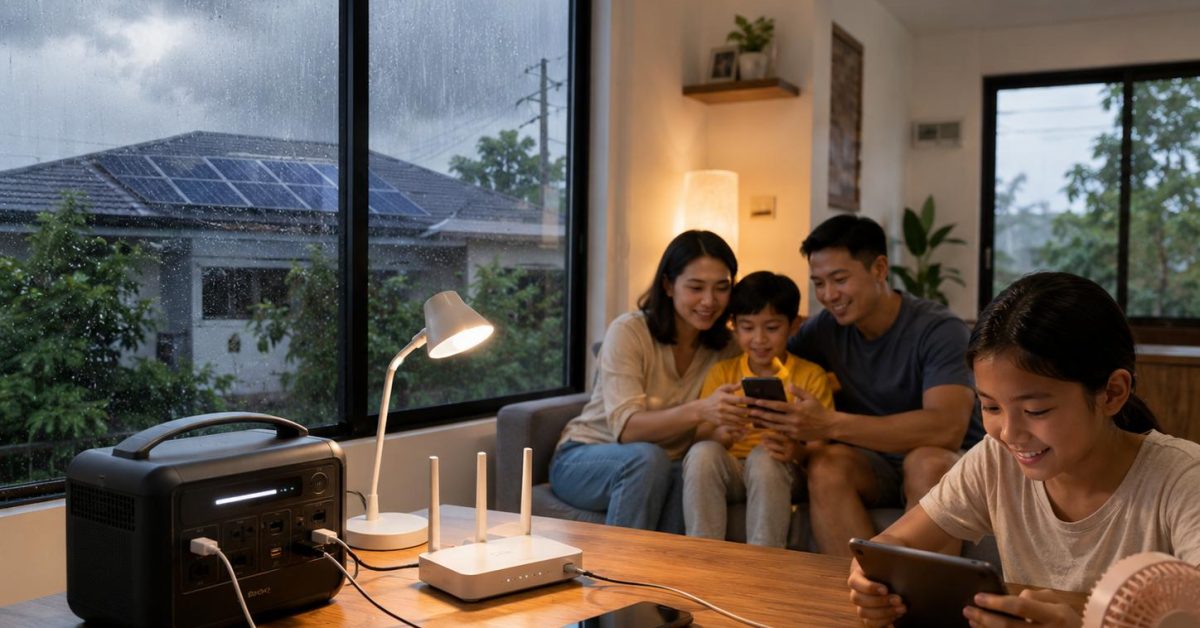
A portable solar generator in the Philippines can also be useful for emergencies. Portable units can carry smaller loads such as phones, laptops, routers, lamps and travel devices. This makes them practical for households that want an easy backup option during power outages.
How traditional generators work during power outages
Traditional generators provide emergency power by using fuels such as gasoline or diesel. They can be useful because they can provide power quickly in the event of a grid failure, especially for households that need to run higher power devices for short periods of time.
However, generators require fuel to continue functioning. During typhoons, fuel supplies can become difficult if gas stations are closed, roads are flooded or delivery routes are interrupted. Homeowners also need to store fuel safely and maintain the generator properly.
Noise and exhaust fumes also play an important role. Generators should never be used indoors or enclosed spaces as they produce harmful fumes. They also create noise, which can be problematic for households with small children, older family members, or people who need peace and quiet in emergencies.
Solar Energy vs. Solar Generators: Key Differences
The main difference between solar energy and generators is fuel dependency. Solar energy uses sunlight, while traditional generators require fuel. This impacts cost, maintenance, safety and long-term comfort.
Solar backup can be quiet, clean and easier to use after installation. It can charge when sunlight is available, useful after a typhoon when the grid remains down but the weather clears. A solar energy system can also contribute to everyday savings when it is part of a properly designed rooftop solar power system.
Generators, on the other hand, can provide instant backup power as long as fuel is available. They can be useful for temporary use, construction work or short outages. However, they do not reduce monthly utility bills and require ongoing fuel and maintenance efforts.
For households that plan ahead, brownout solutions like hybrid solar systems and portable solar backup options can help improve energy security during storms.
Which option costs more over time?
Generators typically cost less than solar rooftops with batteries. This is why some homeowners consider them first. However, long-term costs include fuel, oil changes, maintenance, repairs and secure storage.
Solar backup may require a higher initial investment, especially if the homeowner wants a rooftop solar system with battery storage. However, if designed correctly, the system can also contribute to daily electricity savings. This means that the comparison is more than just the purchase price.
A rooftop solar system in the Philippines can help reduce grid dependency while making more productive use of available roof space. When the system is also prepared for backup power, homeowners can achieve both everyday energy savings and better emergency preparedness.
For smaller backup needs, portable power solutions can provide a more accessible way to keep critical equipment running during short outages.
What can solar backup realistically power?
Solar backup should be planned for critical loads. These are the devices and equipment you need most during an outage. Examples include LED lights, cell phones, laptops, Wi-Fi routers, electric fans, refrigerators and select medical devices.
Whole-house backup is possible, but typically requires a larger system, more battery capacity, and careful load planning. For most households, a critical load approach is more practical. This means selecting the most important circuits or devices rather than trying to power everything at once.
Load management is also important. During a power outage, homeowners can extend the backup time by turning off unused lights, avoiding high-wattage appliances, and using stored energy for essentials first.
When Net Metering Matters
Net metering is not the same as backup power, but it can improve the overall value of a grid-tied solar power system. It allows qualified solar users in the Philippines to export excess solar power to the grid in exchange for bill credit.
For homeowners planning a rooftop solar installation, net metering can help maximize solar production during the day when the home is not using all of the electricity generated. The process can include application documents, technical requirements, inspections and meter replacements and should therefore be discussed with the solar provider at an early stage.
Backup power still requires proper system design. Homeowners seeking both savings and protection from outages should ask themselves whether the recommended setup includes battery storage, critical load scheduling, or portable backup options.
Solar Energy vs Generators in the Philippines: Quick Comparison
During typhoon season in the Philippines, solar power with battery storage or a portable solar backup is more suitable for homeowners who want quiet, clean, and fuel-free backup for essential devices. A traditional generator can still be useful for short-term backup power, but this depends on fuel availability, safe outdoor use, and regular maintenance.
| factor | Solar power with battery or portable solar backup | Conventional fuel generator |
|---|---|---|
| power source | Uses sunlight and stored battery power | Uses gasoline or diesel |
| Best used during typhoons | Essential consumers such as lamps, phones, WiFi, fans, laptops and refrigerators | Short-term backup for devices that require power immediately |
| Fuel dependence | Does not require fuel after charging or after sunlight returns | Requires continuous fuel supply to continue running |
| Use during power outages lasting several days | Can be charged when sunlight is present, making it useful when the weather clears up | Limited by available fuel, road connectivity and operating hours |
| Noise level | Quiet operation, suitable for living areas | Loud and may disturb households or neighbors |
| Security | No exhaust fumes during operation | Due to the risk of harmful fumes and carbon monoxide, use must be outdoors |
| maintenance | Basic cleaning, battery care and system checks are usually required | Requires oil changes, fuel storage, engine maintenance and regular testing |
| Upfront costs | Typically higher, especially with battery storage | Typically lower for small portable units |
| Long-term costs | Lower operating costs because sunlight is free | Higher recurring costs due to fuel and maintenance |
| Daily savings | Can help reduce electricity bills when connected to a rooftop solar power system | Does not reduce regular electricity bills |
| comfort | Works best when planning is focused on critical loads and battery capacity | Easy to start when fuel is available, but requires manual setup and refueling |
| Environmental Impact | Cleaner and emission-free in operation | Produces smoke, fumes and emissions |
| Best for | Homeowners who want quieter, cleaner, fuel-free support for basic needs | Homeowners who need quick assistance and reliable access to fuel |
Key to take away
When comparing solar energy and solar generators, the right choice depends on your backup power needs, budget, fuel access, and long-term energy goals. Generators can provide instant power, but require fuel, maintenance, outdoor placement, and safe operation. Solar power with batteries or portable solar backup can provide quiet, fuel-free support for essential devices when properly planned.
During typhoon season, homeowners should think beyond short-term comfort. A well-designed solar power system can support cleaner energy use, reduce grid dependency, and improve emergency preparedness.
Are you ready to prepare your home for cleaner backup power? Request your free solar quote today and turn on the sun with Solaric now.

Comments are closed.