

How does solar energy help Filipino households reduce their dependency on the grid?
- Generates electricity for domestic use during the day
- Reduces the amount of electricity drawn from the grid
- Supports net metering of excess solar production
- Encourages smarter device use during the day
- Can be paired with batteries or backup systems for backup
overview
- This article explains how solar energy is helping Filipino households reduce their grid dependency in a practical way.
- The focus is on how rooftop solar systems operate during the day, how net metering supports bill reduction, and how homeowners can plan their energy use around solar production.
- For many Filipino households, grid dependence means they are almost entirely reliant on grid power for cooling, lighting, refrigeration, home work equipment, and everyday appliances.
- Solar energy helps reduce this dependency by providing the home with its own source of energy during the day.
A well-designed solar power system for homes in the Philippines can help homeowners reduce electricity costs, use cleaner energy, and better control long-term electricity consumption.
Generate electricity for household use during the day
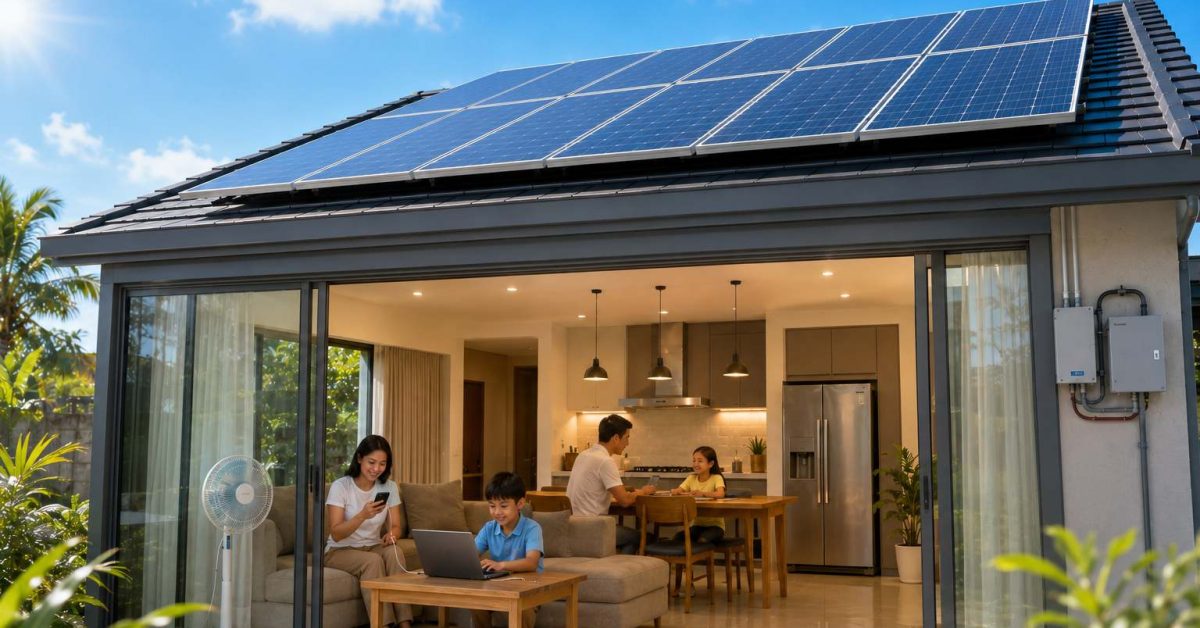
The most direct way solar energy reduces grid dependency is by generating electricity during the day. Solar panels convert sunlight into electricity that can be used by appliances, lamps, computers, fans, refrigerators, washing machines and air conditioners as long as the sun shines.
This is important because many household activities occur during the day. For example, a family may continuously run a refrigerator on hot afternoons, use laptops for work or school, turn on fans, charge devices, wash clothes, or use air conditioning. When solar panels produce electricity, the home can initially use that solar power instead of immediately drawing it from the grid.
This does not mean unplugging the home. This means that the grid becomes a secondary source when solar production is insufficient, such as at night, during heavy rain, or when electricity consumption is higher than solar production.
Reduce network purchases for daily loads
Solar energy helps reduce the amount of electricity a household draws from the grid. The more electricity the house uses from solar energy during the day, the less it has to buy from the energy supplier.
This depends on the time of consumption. A home that uses more electricity during the day can benefit more directly from rooftop solar energy because its energy consumption matches solar production. Common daily loads include refrigerators, air conditioners, fans, washing machines, computers, wireless routers, phone charging, laptops and small kitchen appliances.
For homeowners, the practical goal is not just to install panels. The aim is to balance solar production with household energy consumption. If the system is properly sized and the household uses more electricity as long as the sun is available, grid dependency will naturally decrease.
Use net metering to maximize excess solar power
Net metering helps reduce grid dependency by allowing qualified solar users to export excess solar power to the grid in exchange for bill credit. This is useful if the solar power system produces more electricity than the home uses at certain times of the day.
For example, if no one is home during the day and the system produces more power than the refrigerator, router and standby devices require, this excess power can be exported to the grid as part of an approved net metering facility. The credits can help offset future electricity costs.
This makes a grid-tied solar system more practical for homes that don’t use all of their solar production right away. Through net metering, homeowners can still get value from the excess electricity generated during the day instead of letting it sit unused.
Net metering is not the same as emergency power. It helps reduce electricity costs and maximize solar production, but it doesn’t automatically keep the home powered during a power outage.
Shift device usage to solar production hours
Solar energy can reduce grid dependency even further if homeowners adjust some habits related to daylight production. Since panels generate electricity during the day, shifting flexible tasks to solar hours can improve self-consumption.
For example, homeowners can run washing machines, charge laptops, use fans or schedule certain appliances during the day instead of waiting until the evening. This allows the home to use more solar power directly and draw less power from the grid.
This doesn’t require major lifestyle changes. Even small adjustments can help improve the solar value. A household that uses more energy during sunny hours may rely less on grid power and make better use of its rooftop solar system.
Size the solar power system according to actual consumption
System sizing plays an important role in reducing grid dependency. The sizing of a solar power system should be based on actual power consumption and not guesswork.
A practical guide is to install at least 1kWp of solar panels per 100-130kWh of monthly electricity consumption, especially if daily loads and net metering are part of the plan. A home that uses around 300 kWh per month may need a system of around 3 kWp as a starting estimate. A household that uses around 500 kWh per month may need around 4-5 kWp, depending on available roof space and daily usage.
Sizing is important because an undersized system may not significantly reduce grid consumption, while an oversized system may produce excess electricity that the household cannot fully utilize or export efficiently. A properly sized rooftop solar system in the Philippines should fit the home’s consumption patterns, roof space and long-term savings goals.
Plan for emergency power for greater energy independence
A grid-tied solar power system helps reduce grid dependency during normal operation, but homeowners should still understand what happens during outages. Many standard grid-tied systems shut down during power outages for safety reasons, particularly when utility workers are repairing power lines.
If resiliency is part of the goal, homeowners should ask about battery storage, hybrid solar, portable solar backup, or critical load planning. These options can support essential devices such as LED lights, WiFi routers, phones, laptops, refrigerators, fans, and select medical devices during power outages.
This is where the difference becomes clear: Net metering helps with savings, while batteries or backup systems help with power interruptions. A homeowner who wants both lower bills and emergency preparedness should plan for both from the start.
Key to take away
How solar energy helps Filipino households reduce their grid dependency comes down to producing electricity during the day, reducing utility purchases, maximizing excess electricity through grid metering, switching equipment usage to solar hours, and planning backup options when needed.
A well-designed solar power system gives homeowners more control over where their electricity comes from. This allows the home to use solar energy first, rely less on the grid during the day, and manage long-term electricity costs more effectively.
Are you ready to reduce your home’s dependency on the grid? Request your free solar quote today and turn on the sun with Solaric now.

Comments are closed.